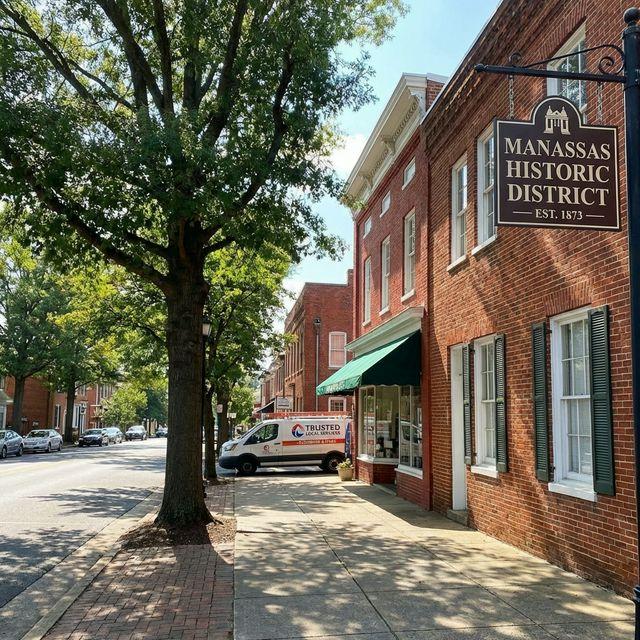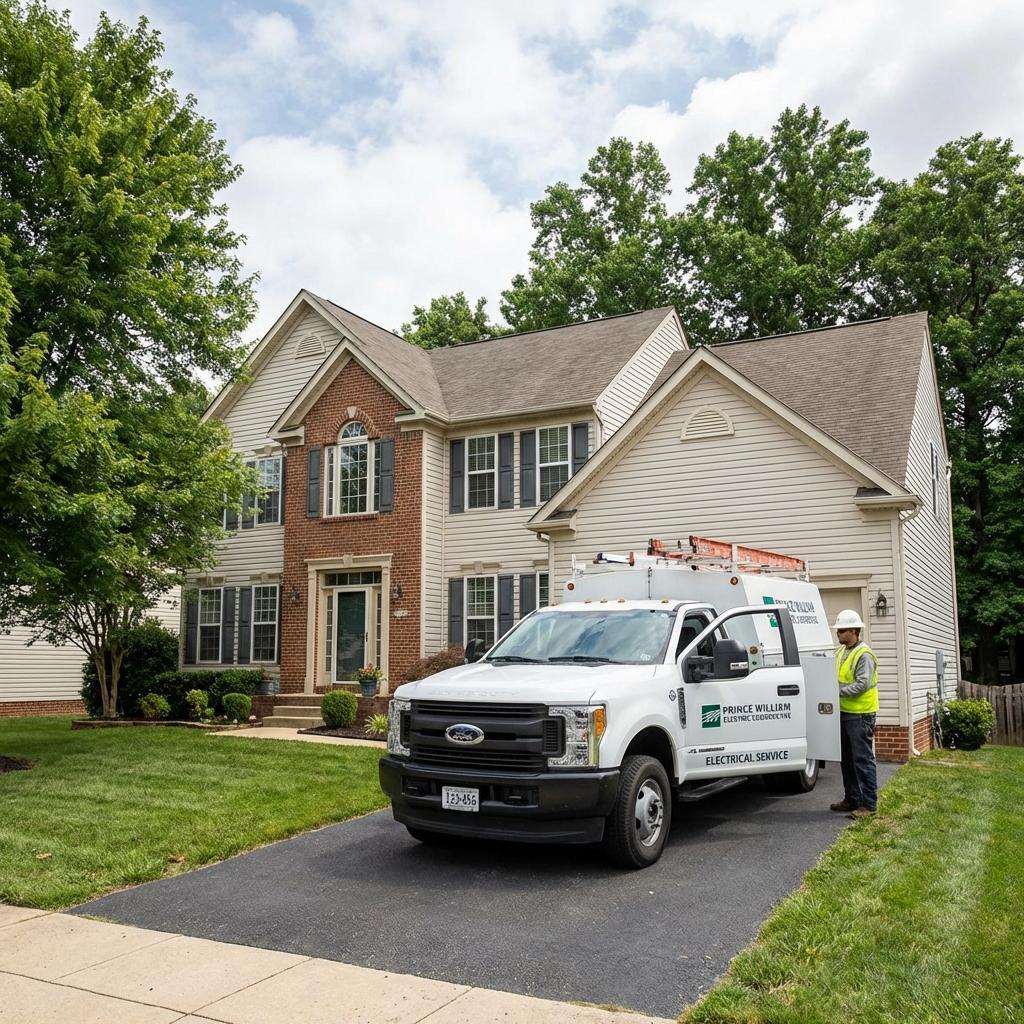
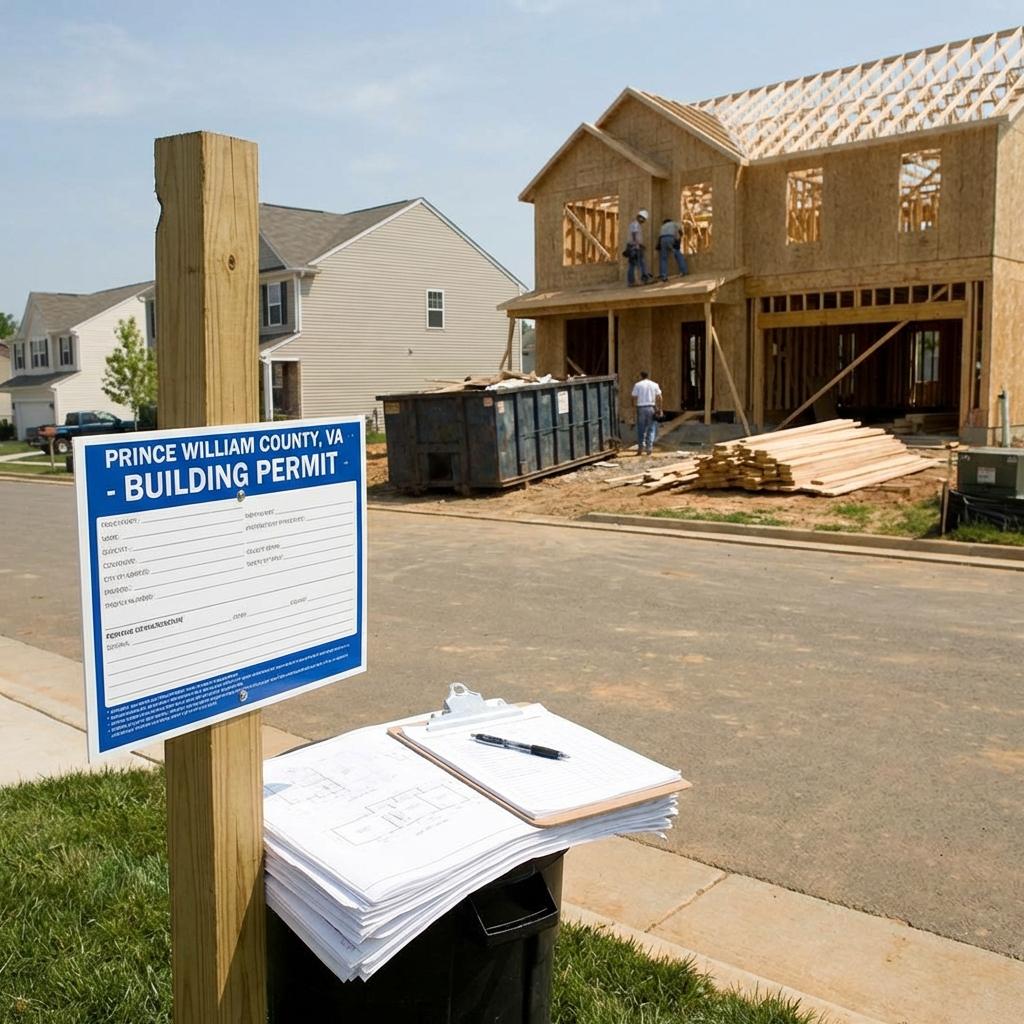
Prince William County is one of Virginia's fastest-growing jurisdictions, stretching from the suburban neighborhoods along the I-66 corridor near Manassas and Gainesville to the established communities of Woodbridge, Dale City, and Lake Ridge along the I-95 corridor, and out to the newer developments in Bristow, Haymarket, and Nokesville. With tens of thousands of homes spanning construction from the 1950s to the present day, Prince William County processes a high volume of electrical permits every year for projects ranging from simple panel upgrades and EV charger installations to comprehensive rewiring and new construction. Understanding the Prince William County electrical permit process, including what requires a permit, how to apply, what inspectors look for, and what happens when work is done without permits, is essential knowledge for any homeowner planning electrical work in the county.
Key Takeaways
- Prince William County requires electrical permits for virtually all work beyond simple like-for-like device and fixture replacements.
- Only Virginia-licensed electrical contractors can pull permits in Prince William County; homeowners cannot self-permit electrical work.
- The county has modernized its permit process with an online portal that streamlines applications and inspection scheduling.
- Unpermitted electrical work in Prince William County can result in fines, required removal of completed work, home sale complications, and insurance claim denials.
- Generator, EV charger, pool, and hot tub installations each have specific permit and code requirements that Prince William County inspectors verify carefully.
What Electrical Work Requires a Permit in Prince William County
Prince William County follows the Virginia Uniform Statewide Building Code, which incorporates the National Electrical Code with Virginia-specific amendments. The county requires permits for nearly all electrical work that goes beyond basic maintenance and like-for-like replacements.
Projects That Always Require Permits
The following types of electrical work always require a Prince William County permit: new electrical service installations and service upgrades, including panel replacements and capacity increases from 100-amp to 200-amp service; installation of new circuits for any purpose, whether for appliances, EV chargers, home office equipment, or additional lighting; whole-home and partial generator installations, covering both the electrical connections and associated gas line work; hardwired EV charger installations that require dedicated circuits; swimming pool, hot tub, and spa electrical connections, which have extensive bonding, grounding, and GFCI requirements; all electrical work associated with building permits for additions, renovations, or finished basements; and any modification to the electrical system's service entrance, including meter base replacement.
Work That Generally Does Not Require a Permit
Simple like-for-like replacements do not typically require permits. Replacing a light switch with the same type of switch, swapping a receptacle for an identical receptacle, changing a light fixture for another fixture in the same location, and replacing a ceiling fan with another fan using existing wiring and support are generally exempt. However, the moment any replacement involves changing wiring, adding a circuit, upgrading from a standard device to a GFCI device, or modifying the system in any way, a permit becomes required.
The Prince William County Permit Application Process
Prince William County has invested in modernizing its permit process, making it more accessible and efficient for contractors and homeowners alike.
Whether it is a simple repair or a major electrical project, our licensed team is ready to help. Serving all of Northern Virginia with transparent pricing and expert workmanship. Call (703) 997-0026 today.
Online Application
Your licensed electrical contractor submits the permit application through Prince William County's online permit portal. The application includes the property address, a description of the proposed work, the contractor's Virginia license information, and for larger projects, electrical plans, load calculations, or other supporting documentation. The online system allows contractors to track application status, receive notifications when permits are issued, and schedule inspections electronically.
County Review
Prince William County reviews each permit application to verify that the proposed work complies with code requirements and that the contractor holds appropriate Virginia licensing. For standard projects like panel upgrades, EV charger installations, and single circuit additions, permits are often issued within one to three business days. More complex projects requiring plan review, such as new construction, major renovations, or commercial work, may take one to two weeks, and the county may request additional information or plan revisions before issuing the permit.
Performing the Work
Once the permit is issued, the licensed contractor performs the electrical work in accordance with the approved plans and applicable codes. The permit must remain posted at the job site and available for inspection throughout the project. All work must be completed within the permit's validity period, typically 180 days from issuance. If the project extends beyond this period, a permit extension must be requested before the original permit expires.
Inspection and Closure
After the work is complete, the contractor schedules an inspection through the county's system. A Prince William County inspector visits the site and examines all aspects of the installation to verify code compliance. The inspector checks proper wiring methods, correct device installation, adequate grounding and bonding, proper circuit protection including AFCI and GFCI where required, accurate panel labeling, required clearances around panels and equipment, and compliance with the specific requirements for the type of work performed. If deficiencies are found, the contractor must make corrections and request a re-inspection.
Schedule your inspection promptly after completing the electrical work. Prince William County may issue notices for permits that remain open beyond their validity period, and open permits appear on property records that are reviewed during home sales. Closing permits quickly keeps your property records clean and avoids potential complications down the road.
Specific Permit Considerations for Common Projects
Different types of electrical projects have specific requirements that Prince William County inspectors focus on during their evaluations.
Panel Upgrades
Panel upgrades in Prince William County require coordination with Dominion Energy when the service size is changing. Upgrading from 100-amp to 200-amp service requires a new meter base and potentially a new service lateral from the utility transformer. Your electrician coordinates with Dominion to schedule the meter pull and reconnection, which must align with the installation schedule. The county inspector verifies proper panel installation, grounding and bonding, circuit protection, breaker torque specifications, and labeling. All circuits must be clearly identified on the panel directory.
Generator Installations
Generator installations typically require two separate permits: an electrical permit for the transfer switch and generator electrical connections, and a mechanical or fuel gas permit for the gas line installation. If the generator is placed on a concrete pad, a building permit may also be required depending on size and location. Prince William County enforces setback requirements from property lines, structures, and operable windows, and the generator must comply with county noise ordinances. Natural gas generators connected to Columbia Gas of Virginia or Washington Gas require coordination with the respective utility for gas service upgrades if needed.
EV Charger Installations
EV charger installations in Prince William County follow the standard electrical permit process. The inspector verifies that the dedicated circuit is properly sized for the charger's amperage rating, that the wiring method is appropriate for the installation environment, that the charger is mounted at the correct height with proper clearances, and that all connections are properly made. If a panel upgrade is needed to support the charger, both projects can typically be covered under a single permit application.
Swimming Pool and Hot Tub Electrical
Pool and hot tub installations have extensive electrical code requirements that Prince William County inspectors verify meticulously. All metal components within the required distance of the water must be bonded, including the pool shell, reinforcing steel, ladders, diving board supports, light niches, and even nearby metal fences or structures. GFCI protection is mandatory for all pool circuits. Underwater lighting must meet specific voltage and installation requirements. Equipment disconnects must be located within sight of the equipment and within the required distance. These projects benefit from early coordination between the pool contractor and electrician to ensure all requirements are met as the pool is built rather than retrofitted after the fact.
Prince William County has experienced significant growth in solar panel installations, and the county has streamlined its permit process for photovoltaic systems. If you are considering solar panels for your Prince William County home, the electrical permit covers the inverter, disconnect, and grid interconnection components. Coordination with Dominion Energy for net metering approval is a separate process that your solar installer typically manages.
Consequences of Working Without Permits
The temptation to skip permits to save time or money is understandable, but the consequences of unpermitted electrical work in Prince William County are serious and lasting.
Fines and Enforcement
Prince William County can impose fines for unpermitted work when it is discovered, whether through a neighbor's complaint, a home inspection during a sale, or a county building official's observation. The county may require that completed work be exposed for inspection, which means opening walls and ceilings at the homeowner's expense, or removed entirely if it does not meet code.
Home Sale Complications
When you sell your Prince William County home, the buyer's home inspector and title company may identify unpermitted work through permit records or physical evidence. Unpermitted work creates uncertainty about safety and code compliance, often resulting in buyers demanding concessions, repairs, or retroactive permitting as a condition of purchase. In some cases, unpermitted work can delay or prevent closing entirely.
Insurance Implications
Homeowner's insurance policies typically require that electrical work be performed by licensed contractors in accordance with local codes. If a fire or other damage is caused by or related to unpermitted electrical work, the insurance company may deny the claim, leaving the homeowner personally responsible for all losses. This risk alone makes the modest cost of permits a wise investment in financial protection.
Trust AJ Long Electric for Prince William County Projects
AJ Long Electric has extensive experience with Prince William County's permit process, code requirements, and inspection standards. From Woodbridge and Dale City to Gainesville, Bristow, and Haymarket, we have completed hundreds of permitted projects throughout the county. Our team handles every step of the permit process, from initial application through final inspection and permit closure, ensuring that homeowners can focus on enjoying their improved electrical systems rather than navigating bureaucratic processes. Contact AJ Long Electric today to discuss your Prince William County electrical project and receive a comprehensive estimate that includes all permit costs and projected timelines.
Tags:

Written by
AJ Long Electric Team
Licensed Electricians
Our team of licensed electricians brings over 40 years of combined experience serving Northern Virginia. We're committed to providing expert electrical solutions with a focus on safety, quality, and customer satisfaction.
Reviewed by AJ Long Electric Master Electricians · VA License #2705031092 · View Credentials