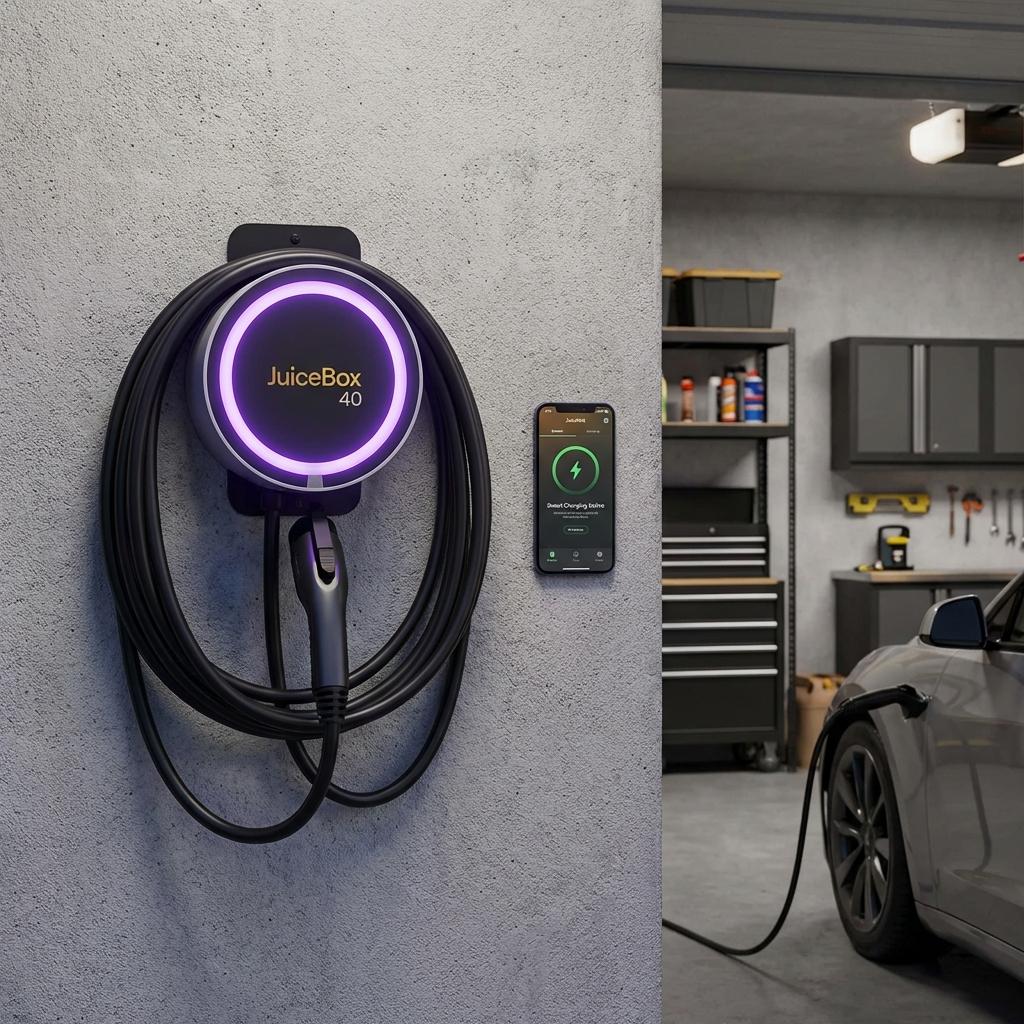
Not every Northern Virginia home has a garage, and even those that do may prefer to charge their EV in the driveway, carport, or a dedicated outdoor parking area. Outdoor EV charger installations are fully safe and reliable when performed by a licensed electrician using properly rated equipment. Whether you park in front of your townhouse in Herndon, beside your detached garage in Fairfax, or under a carport in Prince William County, outdoor charging is a proven solution used by thousands of EV owners across the DMV region.
Key Takeaways
- Modern EV chargers with NEMA 3R or NEMA 4 ratings are designed for full outdoor exposure including rain, snow, and extreme temperatures.
- Outdoor installations require weatherproof conduit, boxes, and connections that meet NEC code requirements.
- Mounting options include wall-mount on exterior surfaces, pedestal mount, and post mount for standalone locations.
- Underground conduit runs provide the cleanest appearance and best cable protection for driveway installations.
- Outdoor installations in Northern Virginia require the same electrical permits as indoor installations.
Why Outdoor EV Charger Installation Makes Sense
Many Northern Virginia homeowners assume EV chargers must be installed inside a garage, but this is not the case. There are several legitimate reasons to choose an outdoor installation.
No Garage Available
Many homes in Northern Virginia, particularly older ranchers in Fairfax County, mid-century homes in Arlington, and some townhouses in Reston and Centreville, do not have enclosed garages. Some have carports, while others have only open driveway parking. Outdoor installation is the natural solution for these homes, and modern chargers are specifically designed for it.
Garage Space Constraints
Even homes with garages may have space issues. If your garage is used for storage, a workshop, or simply cannot fit your vehicle, mounting the charger on the exterior wall near your driveway parking spot makes more practical sense. The charger cable easily reaches from an exterior wall mount to your vehicle parked just outside the garage door.
Multiple Parking Locations
Some households park different vehicles in different spots. An outdoor pedestal or post-mounted charger positioned between two parking areas can serve multiple vehicles with flexible cable reach.
Understanding Weatherproof Ratings for EV Chargers
The NEMA (National Electrical Manufacturers Association) rating system defines how well an enclosure protects against environmental conditions. Understanding these ratings helps you choose the right charger for outdoor use.
Our licensed electricians have installed hundreds of EV chargers across Northern Virginia. We handle everything from panel evaluation to permit filing. Call (703) 997-0026 or request your free estimate online.
NEMA 3R
NEMA 3R enclosures protect against falling rain, sleet, and external ice formation. This is the minimum rating for outdoor EV charger installation and is sufficient for most Northern Virginia applications. The Tesla Wall Connector and ChargePoint Home Flex both carry NEMA 3R ratings. These chargers can be mounted on exterior walls under a standard eave or overhang without additional protection.
NEMA 4
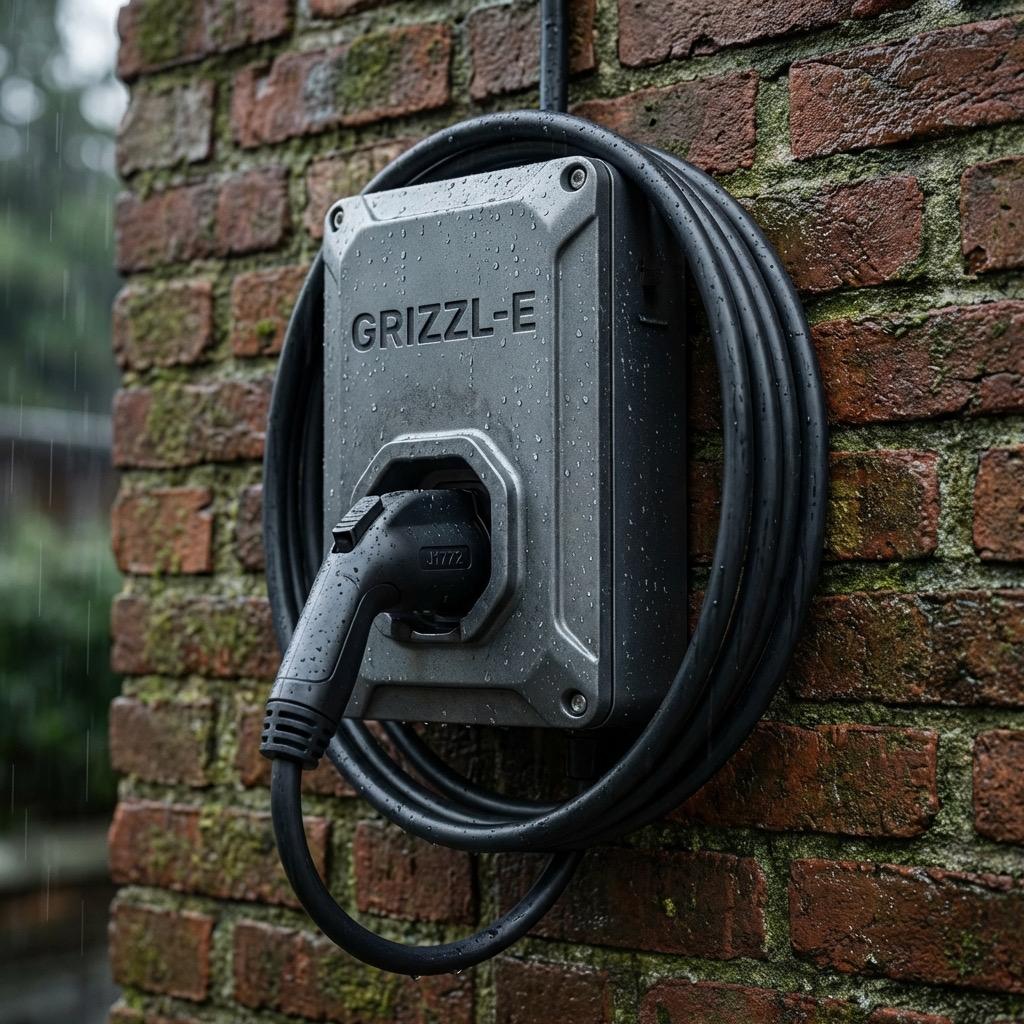
NEMA 4 enclosures provide enhanced protection against windblown rain, splashing water, and hose-directed water. Chargers like the Grizzl-E carry NEMA 4 ratings, making them suitable for fully exposed locations without any overhead cover. If your charger will be mounted on a standalone post in an open driveway with no overhead protection, NEMA 4 provides additional peace of mind.
Temperature Ratings
Northern Virginia temperatures range from occasional single digits in winter to upper 90s in summer. Most quality EV chargers are rated for operation from -22 degrees F to 122 degrees F, well beyond our local climate extremes. Cold weather may slightly reduce charging speed due to battery management behavior in your vehicle, but the charger itself operates normally in all local weather conditions.
Outdoor Mounting Options
Where and how you mount your outdoor charger depends on your parking layout, the distance from your electrical panel, and your aesthetic preferences.
Exterior Wall Mount
The most common outdoor installation mounts the charger on the exterior wall of your garage, house, or an adjacent structure. This approach is typically the most affordable because it keeps the conduit run short and leverages existing structure for support. For homes in Northern Virginia where the garage faces the driveway, mounting on the exterior garage wall places the charger right next to where you park.
Pedestal Mount
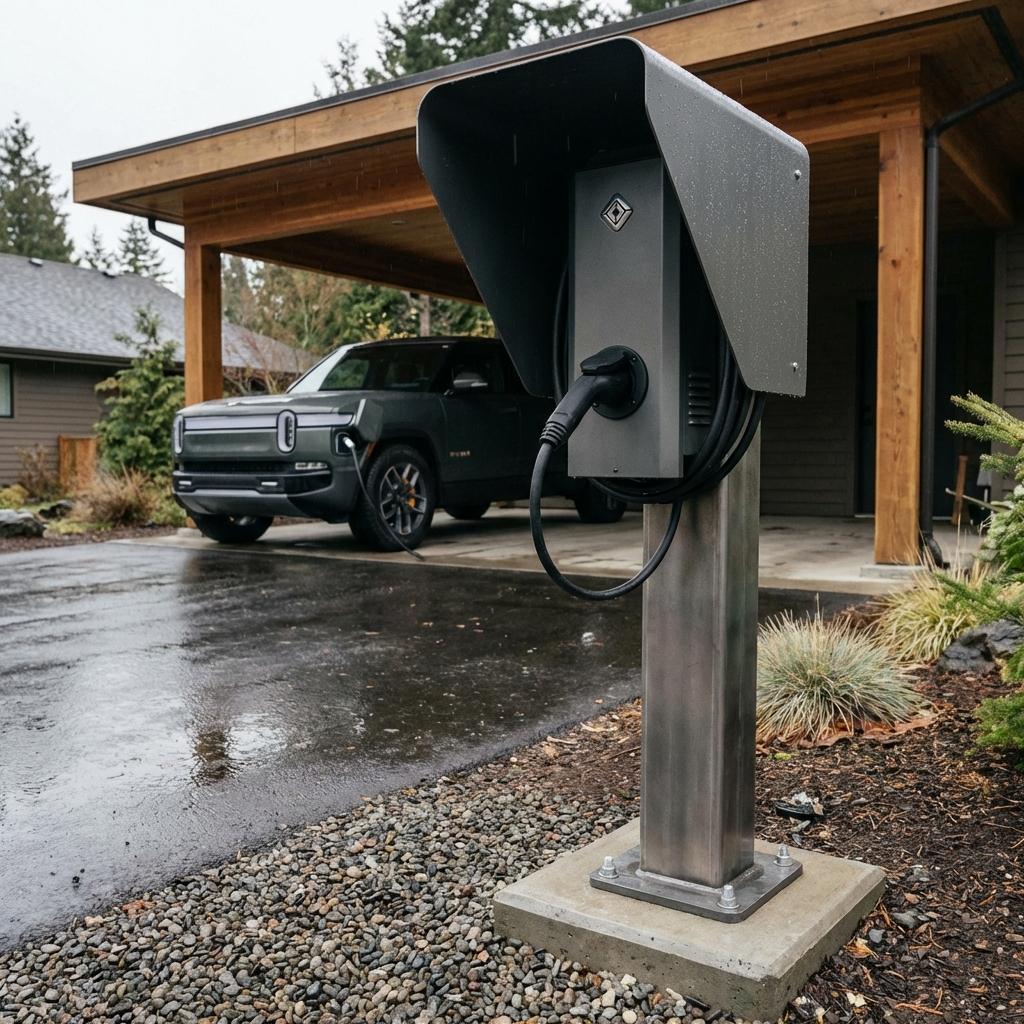
A pedestal mount uses a freestanding metal post or column to support the charger in a location away from any building. This is ideal for island parking configurations, shared driveways, or locations where the nearest wall is too far from the parking area. The pedestal must be anchored in a concrete footing and connected to the electrical panel via underground conduit. Pedestal installations cost more due to the additional materials and trenching but provide maximum placement flexibility.
Post Mount
Similar to a pedestal mount but using a single post, often a 4x4 treated lumber post or a steel pole set in concrete. Post mounts are a cost-effective alternative to manufactured pedestals and can be positioned anywhere along a driveway or parking pad. They are particularly popular for homes in communities like South Riding, Stone Ridge, and Broadlands where driveways are long and the garage panel is far from the preferred charging location.
Electrical Considerations for Outdoor Installations
Outdoor installations add several electrical requirements beyond what a standard indoor installation needs.
Weatherproof Conduit
All wiring must be enclosed in conduit rated for the installation environment. For exterior wall-mounted runs, rigid PVC or liquidtight flexible conduit provides excellent weather protection. For underground runs, Schedule 80 PVC conduit buried to the depth required by local code (typically 18-24 inches for residential electrical) protects the wire from moisture, physical damage, and rodents.
Weatherproof Boxes and Fittings
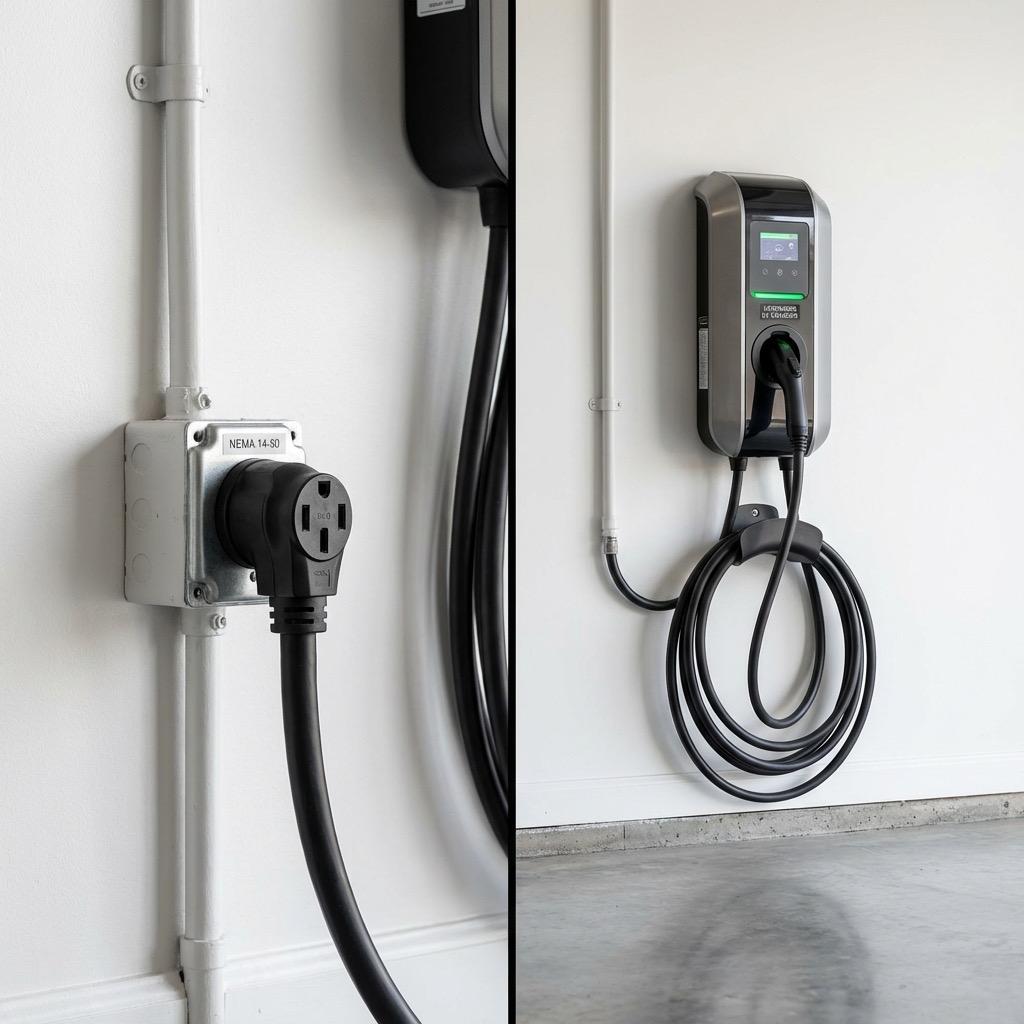
Every junction box, outlet box, and conduit fitting in an outdoor installation must be rated for wet or damp locations. NEMA 3R boxes with weatherproof covers are standard for outdoor electrical work. If you are installing a NEMA 14-50 outlet for a plug-in charger, a weatherproof in-use cover is required to protect the outlet while the charger is plugged in.
Underground Conduit Runs
For installations where the charger is located away from the house, underground conduit provides the cleanest and most durable routing. The process involves trenching from the house to the charger location, laying Schedule 80 PVC conduit at proper burial depth, pulling the wire through the conduit, and backfilling the trench. While trenching adds cost, it eliminates exposed conduit running along walls or across the ground, and it protects the wire from weather, UV exposure, and accidental damage.
GFCI Protection
NEC code requires ground fault circuit interrupter protection for EV chargers in certain outdoor locations. A GFCI breaker in your panel provides this protection, automatically shutting off power if it detects a ground fault. Many modern EV chargers include built-in GFCI protection, but your electrician will verify that the installation meets all applicable code requirements.
Cost Factors for Outdoor Installations
Outdoor installations in Northern Virginia typically cost $200-$1,500 more than equivalent indoor installations, depending on the specific factors involved.
- Short exterior wall mount (panel nearby): $200-$400 additional for weatherproof components
- Moderate underground run (25-50 feet): $800-$1,200 additional for trenching and underground conduit
- Long underground run with pedestal (50-100 feet): $1,200-$2,500 additional for extended trenching, conduit, heavier gauge wire, and pedestal hardware
These costs are in addition to the base installation cost of the charger circuit. For a complete outdoor installation, total costs typically range from $1,500 to $4,000 depending on complexity.
Permit Requirements for Outdoor Installations
Outdoor EV charger installations require the same electrical permits as indoor installations in all Northern Virginia jurisdictions. Additionally, underground conduit work may require a separate or expanded permit in some jurisdictions. Our team handles all permit applications for Fairfax, Arlington, Loudoun, and Prince William counties as part of our standard service.
Schedule Your Outdoor EV Charger Installation
AJ Long Electric has extensive experience with outdoor EV charger installations across Northern Virginia. From simple exterior wall mounts to complex underground runs with pedestal mounting, our team handles every aspect of the installation including site assessment, permitting, trenching, electrical work, and inspection. We ensure every outdoor component is properly rated and installed for long-term reliability in Virginia's variable climate. Contact AJ Long Electric at (703) 481-3732 to discuss your outdoor EV charger installation needs.
Tags:

Written by
Matt Long
Master Electrician
Our team of licensed electricians brings over 40 years of combined experience serving Northern Virginia. We're committed to providing expert electrical solutions with a focus on safety, quality, and customer satisfaction.
Reviewed by AJ Long Electric Master Electricians · VA License #2705031092 · View Credentials