Northern Virginia winters bring temperatures that can significantly affect your electric vehicle's charging speed and driving range. While the DMV area does not experience the extreme cold of Minnesota or Maine, January and February regularly deliver stretches of freezing temperatures, with occasional dips into the teens and single digits, particularly in western Fairfax, Loudoun, and Prince William counties. Understanding how cold weather affects your EV's battery and adapting your charging habits accordingly ensures you stay mobile and comfortable throughout the winter months.
Key Takeaways
- Cold weather can reduce EV charging speed by 20-30% as the battery management system protects cells from damage.
- Driving range decreases 20-40% in cold weather due to reduced battery efficiency and cabin heating demands.
- Preconditioning your vehicle while plugged in uses grid power for heating, preserving battery range for driving.
- Charging immediately after driving, when the battery is warm, minimizes cold-weather charging slowdowns.
- Garage parking provides a meaningful advantage, keeping your battery 10-20 degrees warmer than outdoor temperatures.
How Cold Weather Affects EV Batteries
Electric vehicles use lithium-ion batteries, the same fundamental chemistry found in smartphones and laptops. These batteries are sensitive to temperature, and their performance varies meaningfully between summer and winter conditions.
The Chemistry Behind Cold Weather Effects
Lithium-ion batteries generate power through chemical reactions that move lithium ions between the anode and cathode. In cold temperatures, these reactions slow down. The electrolyte becomes more viscous, increasing internal resistance and reducing the rate at which ions can move. This increased resistance means less energy is available for driving and less energy can be accepted during charging.
Battery Management System Behavior
Every modern EV has a battery management system (BMS) that monitors cell temperatures and protects the battery from damage. When cells are cold, the BMS restricts charging speed to prevent lithium plating, a condition where lithium metal deposits on the anode surface instead of properly intercalating between layers. Lithium plating can permanently damage the battery, so the BMS prioritizes long-term battery health over short-term charging speed. As the battery warms up, either through driving or through the car's battery heating system, the BMS gradually allows higher charging rates.
Quantifying the Impact
In Northern Virginia's typical winter conditions (20-40 degrees F), expect the following impacts compared to ideal temperatures of 60-80 degrees F. Charging speed on Level 2 may decrease by 10-20% when the battery is cold. After 30-60 minutes of charging as the battery warms, speed returns to near-normal. DC fast charging is more significantly affected, with speed reductions of 20-40% until the battery reaches optimal temperature. Your home Level 2 charger is less affected than DC fast chargers because home charging sessions are longer, allowing the battery to warm gradually.
Cold Weather Range Reduction
Range loss in cold weather comes from two sources: reduced battery efficiency and increased energy consumption for cabin heating.
Our licensed electricians have installed hundreds of EV chargers across Northern Virginia. We handle everything from panel evaluation to permit filing. Call (703) 997-0026 or request your free estimate online.
Battery Efficiency Loss
Cold batteries deliver less energy per kilowatt-hour stored. A battery that provides 3.5 miles per kWh in summer may only deliver 2.5-3.0 miles per kWh in winter. This reduction alone accounts for a 10-20% range decrease.
Cabin Heating Demands
Gas cars use waste heat from the engine to warm the cabin, which is essentially free. EVs must use battery power for heating, and resistive heating systems in older EVs consume 3-5 kW continuously. Newer EVs with heat pumps (Tesla Model Y, Hyundai Ioniq 5, BMW iX) are more efficient, using 1-2 kW for the same heating output, but still draw meaningful power. On a 30-minute commute from Centreville to Tysons in January, cabin heating can consume 1-2 kWh, equivalent to 4-7 miles of driving range.
Total Winter Range Impact
Combining battery efficiency loss and heating demands, most EV owners in Northern Virginia experience 20-30% range reduction during cold snaps. On the coldest days (teens and single digits), reduction can reach 40%. A vehicle rated at 300 miles in ideal conditions may show 180-240 miles of available range on a cold morning. This is important to understand but not a cause for alarm. Most NoVA commutes are well within even the reduced range, and overnight home charging replenishes your battery fully regardless of the cold.
Tips for Optimizing Winter Charging and Range
Precondition While Plugged In
Preconditioning is the single most effective strategy for winter EV ownership. Most modern EVs allow you to schedule cabin preheating through the vehicle's app. When you precondition while plugged into your home charger, the energy for heating the cabin and warming the battery comes from the grid, not your battery. You leave with a warm cabin, a warm battery operating at peak efficiency, and a full charge. Set preconditioning to begin 15-30 minutes before your departure time. For a 7 AM departure from your home in Ashburn or Burke, set preconditioning for 6:30 AM.
Charge Immediately After Driving
When you arrive home from your commute, the battery is warm from the drive. Plugging in immediately allows charging to begin at or near full speed, without the initial warm-up period that a cold-soaked battery requires. If you normally delay charging for off-peak rates, consider allowing a brief pre-warm charge when you first plug in, then scheduling the bulk of charging for off-peak hours.
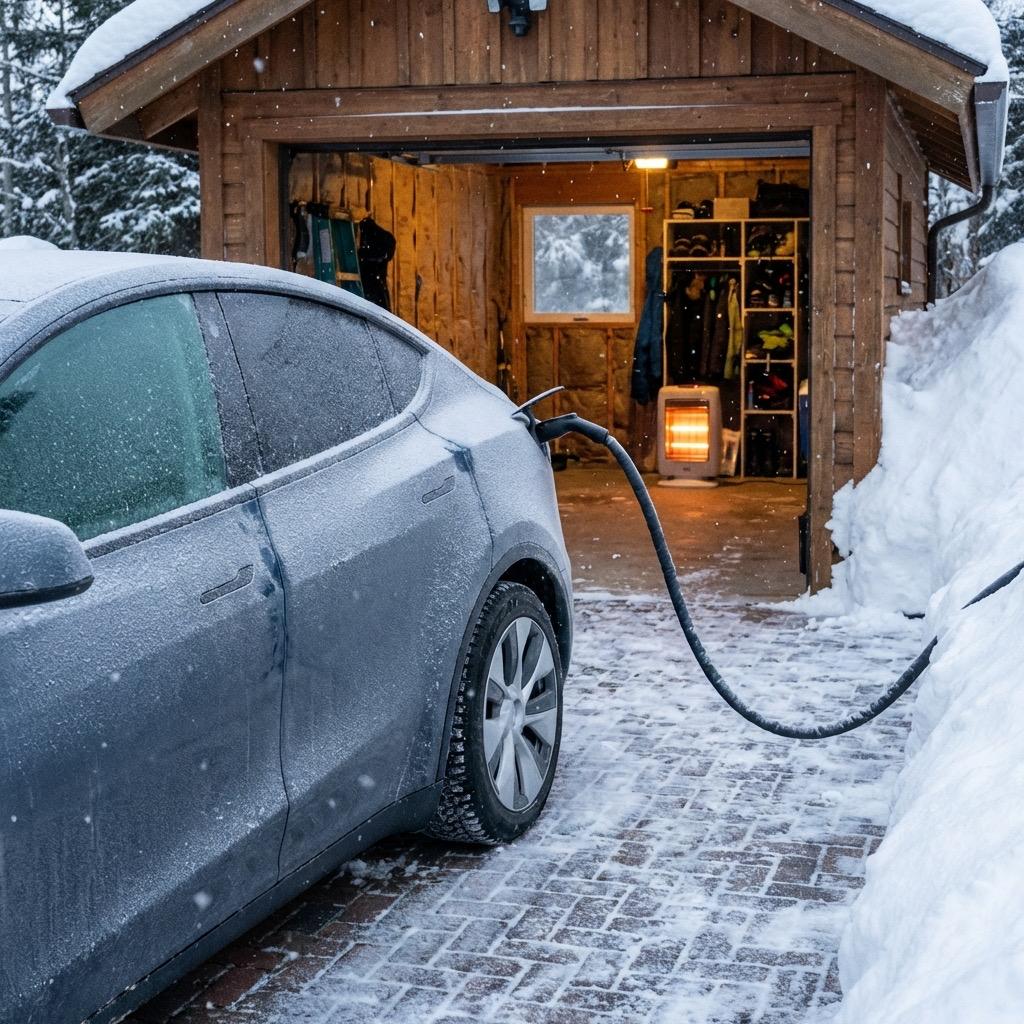
Park in Your Garage
A garage provides meaningful thermal protection. Even an unheated garage is typically 10-20 degrees warmer than outside temperatures, which keeps your battery warmer and reduces the energy needed for preconditioning. If your garage is currently used for storage, consider reclaiming it for your EV during winter months. The energy savings and convenience improvement are significant.
Set Charging to Complete Before Departure
Many EVs allow you to set a departure time, and the vehicle will calculate when to start charging so the battery reaches your target level just before you leave. This timing means the battery is fresh and slightly warm from the charging process when you begin your drive, maximizing both range and charging efficiency.
Use Seat Heaters Instead of Cabin Heat
Heated seats and steering wheel use a fraction of the energy that cabin heating requires. On shorter trips, using seat and steering wheel heat instead of blasting the cabin heater can save 30-50% of heating energy consumption, translating to meaningful range preservation.
Winter Charging Infrastructure Tips
A few practical considerations keep your home charging setup performing well through Northern Virginia winters.
Keep Connectors Clean and Dry
After snow or freezing rain, check that the J1772 connector and your vehicle's charge port are free of ice and moisture before plugging in. Most connectors are designed to shed water, but a quick wipe with a dry cloth ensures clean contact.
Manage Cable Flexibility
Charging cables become stiffer in cold weather. Cable management hooks and holsters help keep the cable organized and prevent kinking. The Grizzl-E's cable is particularly well-regarded for maintaining flexibility in cold temperatures.
Check Your Charger After Power Outages
Winter storms in Northern Virginia occasionally cause power outages. After power is restored, verify your charger is functioning normally and your scheduled charging settings are intact. Some chargers resume automatically, while others may require manual restart.
Winter Road Trip Planning
For longer winter drives, such as heading to ski resorts in West Virginia, visiting family in Richmond, or traveling to the Shenandoah Valley, plan for the reduced range by adding charging stops. Apps like PlugShare and A Better Route Planner account for cold weather effects and recommend appropriate stopping points. Leave with a full charge from home, and you will have plenty of range to reach your first fast-charging stop.
Prepare Your EV Charging for Winter
AJ Long Electric helps Northern Virginia homeowners ensure their EV charging infrastructure is ready for winter. If you are still relying on Level 1 charging, the slower speeds become even more problematic in cold weather. Upgrading to Level 2 ensures your battery is fully charged every morning regardless of temperature. Contact AJ Long Electric at (703) 481-3732 to upgrade your home charging before winter arrives.
Tags:

Written by
Matt Long
Master Electrician
Our team of licensed electricians brings over 40 years of combined experience serving Northern Virginia. We're committed to providing expert electrical solutions with a focus on safety, quality, and customer satisfaction.
Reviewed by AJ Long Electric Master Electricians · VA License #2705031092 · View Credentials