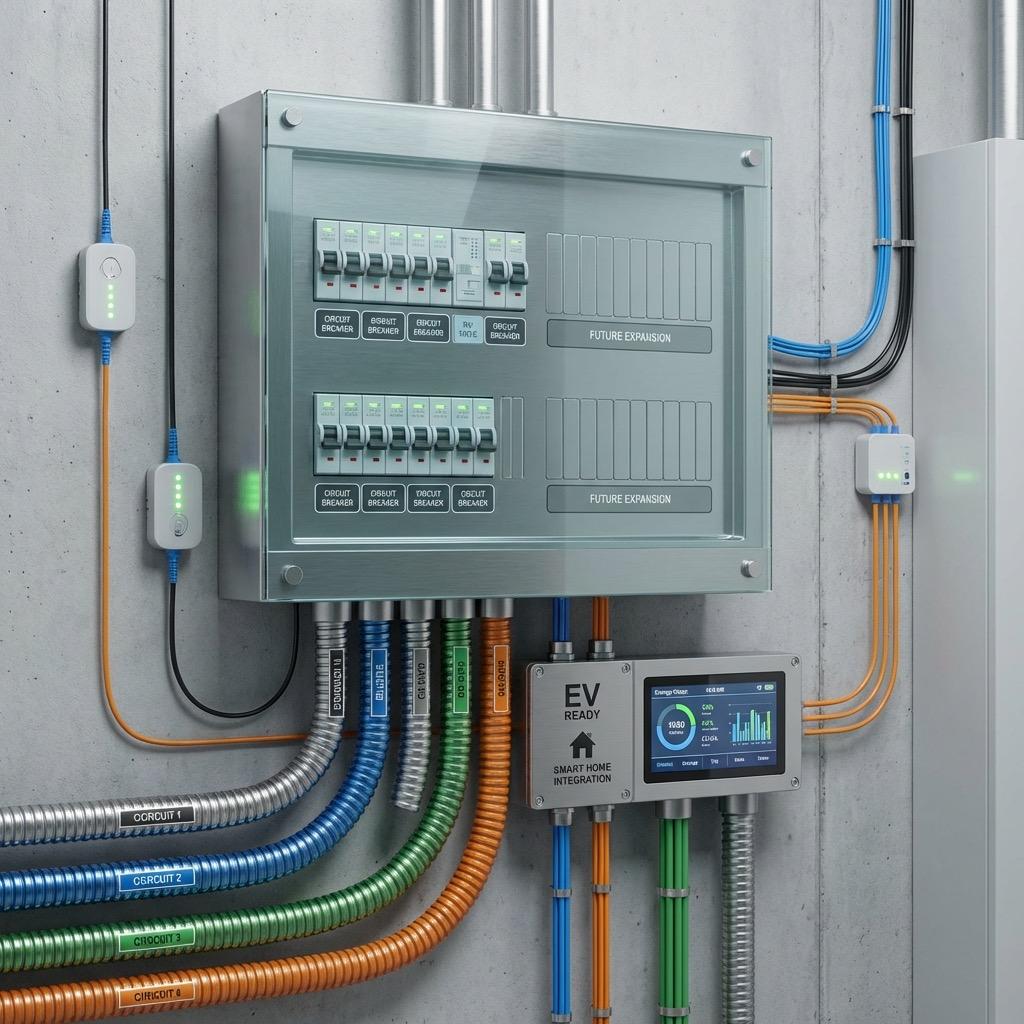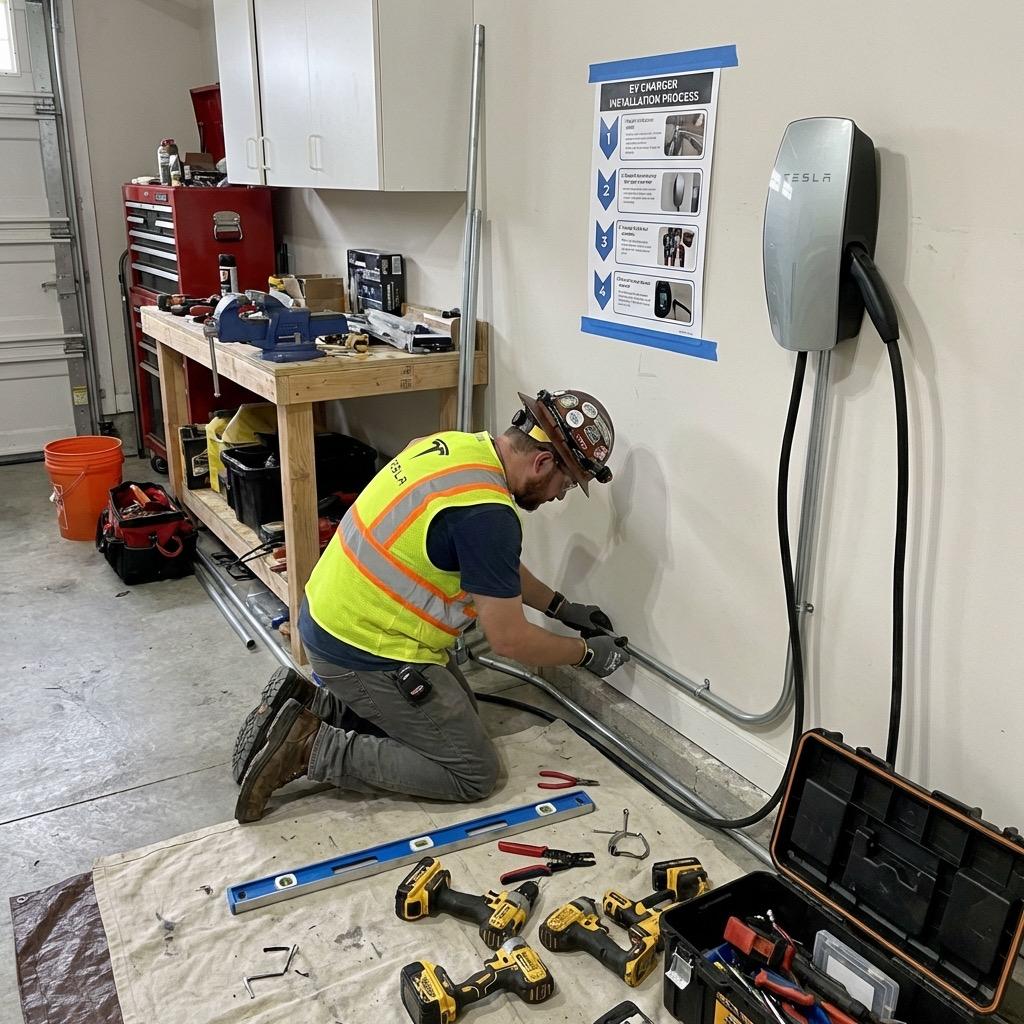
Installing an EV charger in a townhouse or condominium presents unique challenges that single-family homeowners never encounter. HOA approvals, shared parking structures, long conduit runs, metering questions, and neighbor considerations all add complexity to what is otherwise a straightforward electrical project. For the thousands of townhouse and condo owners across Northern Virginia, from the high-rise condos of Rosslyn and Ballston to the townhouse communities of Reston, Herndon, Centreville, and Woodbridge, this guide navigates the complete process from HOA approval through installation and inspection.
Key Takeaways
- Virginia law (Code Section 55.1-1823.1) protects your right to install an EV charger in your deeded or assigned parking space, even with HOA restrictions.
- HOA approval processes typically take 2-6 weeks and require an architectural review application.
- Townhouse installations are generally simpler than condo installations because you typically have direct access to your own electrical panel.
- Condo garage installations may require long conduit runs, sub-metering, and coordination with building management.
- Installation costs for townhouses and condos range from $1,200 to $4,500 depending on complexity and distance from your panel.
Understanding Your Rights: Virginia EV Charger Law
Before diving into the installation process, it is important to understand your legal rights as a Virginia homeowner in a community association.
Virginia Code Section 55.1-1823.1
Virginia law explicitly addresses EV charger installation in common interest communities. The law prohibits HOAs from completely banning EV charger installation in parking spaces that an owner has exclusive use of, whether deeded, assigned, or designated. The HOA can impose reasonable restrictions regarding insurance requirements, installation standards and licensed contractor requirements, aesthetics and placement guidelines, compliance with building codes, and responsibility for electricity costs and damage. However, the HOA cannot use these restrictions to effectively prevent installation or make it prohibitively expensive through unreasonable requirements.
What This Means for You
If your HOA denies your EV charger request outright, the law is on your side. If they impose conditions, those conditions must be reasonable. If you encounter resistance, reference Virginia Code Section 55.1-1823.1 in your communication with the HOA board. In our experience installing chargers in dozens of Northern Virginia HOA communities, most boards approve requests promptly once they understand the legal framework and see a professional installation plan.
The HOA Approval Process
Most HOAs require an architectural review or modification request before any exterior or electrical work. Here is how to navigate this process smoothly.
Our licensed electricians have installed hundreds of EV chargers across Northern Virginia. We handle everything from panel evaluation to permit filing. Call (703) 997-0026 or request your free estimate online.
Step 1: Review Your Governing Documents
Before submitting a request, review your HOA's Declaration of Covenants, Conditions and Restrictions (CC&Rs) and Architectural Guidelines for any existing provisions regarding EV chargers. Some newer community documents in Loudoun and Prince William County developments already include EV charger provisions.
Step 2: Prepare a Professional Proposal
HOA boards respond better to thorough, professional submissions. Include a description of the proposed charger and its specifications, the exact installation location with photos or diagrams, the routing path for any conduit or wiring, confirmation that a licensed electrician will perform the work, proof of liability insurance from your contractor, and a timeline for the installation. AJ Long Electric provides detailed installation proposals specifically formatted for HOA submissions, including diagrams and specification sheets.
Step 3: Submit and Follow Up
Submit your request through the HOA's official architectural review process. Most boards meet monthly, so timing your submission before a meeting can speed approval. Follow up politely if you have not received a response within 30 days.
Step 4: Address Conditions
If the HOA approves with conditions, such as specific conduit color, routing requirements, or insurance provisions, work with your electrician to meet those conditions. Most conditions add minimal cost and are easy to accommodate.
Townhouse EV Charger Installation
Townhouse installations are generally simpler than condo installations because townhouses typically have individual electrical panels, attached or tuck-under garages, and direct access to the installation area without passing through common spaces.
Garage Installations
If your townhouse has an attached garage (common in communities throughout Reston, Herndon, Centreville, and Manassas), the installation closely resembles a single-family home installation. Your electrical panel is likely in the garage, basement, or utility closet, and the charger mounts on the garage wall near your parking area. Run length is short, and the installation is straightforward. These installations typically cost $800-$1,800.
Driveway Installations
Some townhouses, particularly those in older Northern Virginia communities, have driveways but no garages. In these cases, the charger mounts on the exterior of the unit, and the circuit runs from an interior panel through the exterior wall. Weatherproof conduit and an outdoor-rated charger are required. These installations cost $1,200-$2,500 depending on the run distance and routing complexity.
Parking Pad Installations
Townhouses with assigned parking pads away from the unit require longer conduit runs, sometimes underground. These are the most complex townhouse installations and cost $2,000-$4,000. A pedestal or post mount may be necessary if there is no adjacent wall for mounting the charger.
Condominium EV Charger Installation
Condo installations are the most complex residential EV charger projects due to the shared building infrastructure and the distance between your unit's electrical panel and your parking space.
Parking Garage Considerations
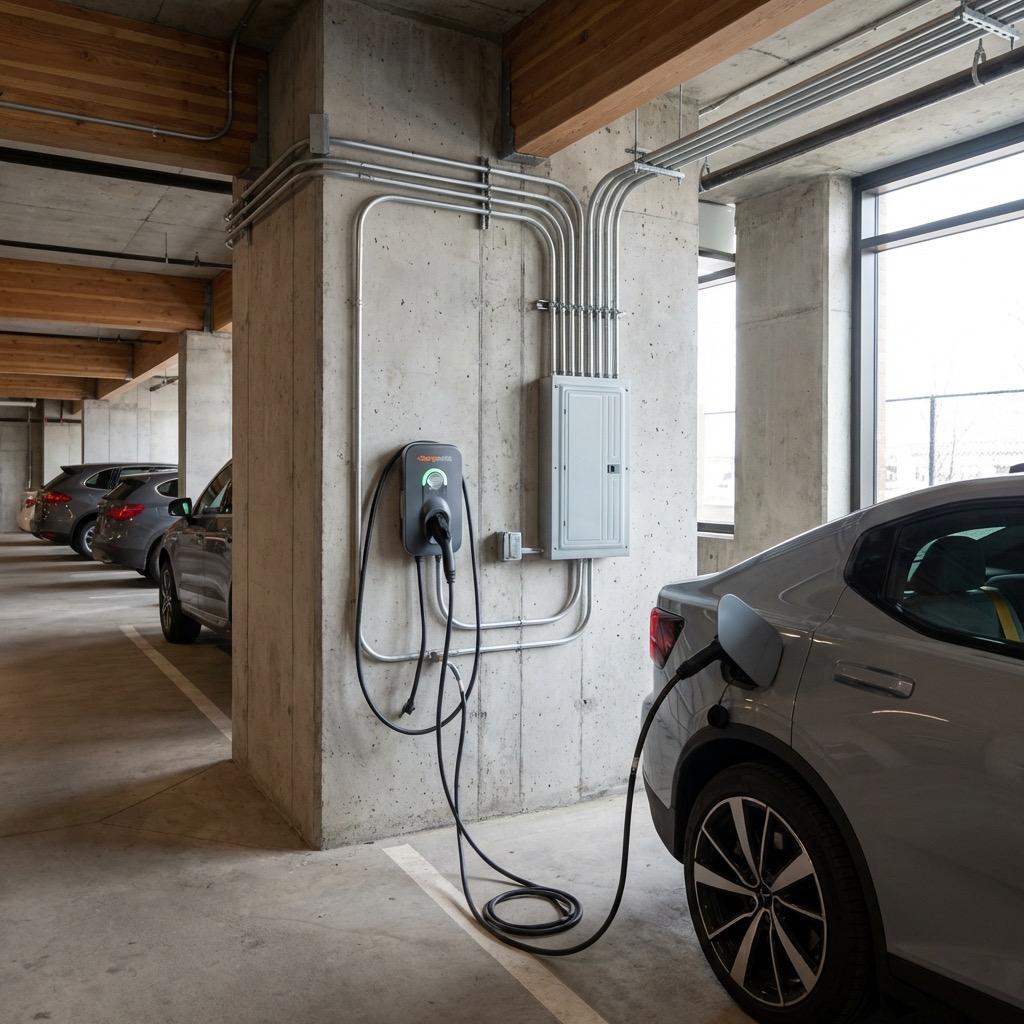
In condo buildings with parking garages, the charger is installed at your assigned parking space, but the power typically comes from your unit's electrical panel. The conduit run may travel from your unit through common areas, down elevator shafts or utility chases, and across the garage to your space. These runs can be 100-200 feet or more, requiring heavier gauge wire to prevent voltage drop and more extensive conduit work. Costs for garage installations range from $2,500 to $5,000+.
Metering and Electricity Costs
If your charger connects to your unit's panel, the electricity shows up on your personal utility bill. If the building provides a common circuit for EV charging, sub-metering may be required so you pay for your actual consumption rather than splitting costs with other EV-owning residents. Sub-metering adds $200-$500 to the installation but provides fair, transparent electricity cost tracking.
Building Management Coordination
Condo installations often require coordination with building management for access to utility chases, common area conduit routing, fire code compliance in parking structures, and scheduling work during building-approved hours. Our team has experience coordinating with condo management companies throughout the Arlington, Tysons, and Reston areas.
Fire Code Compliance
Parking garages have specific fire code requirements that affect EV charger installation. Conduit must be routed to avoid fire suppression systems, and some jurisdictions require fire-rated materials for electrical runs through certain areas. Your electrician must be familiar with these requirements to ensure a code-compliant installation.
Cost Breakdown for Townhouse and Condo Installations
Here are typical cost ranges for the Northern Virginia area based on our installation experience.
- Townhouse with garage (short run): $800-$1,800
- Townhouse with exterior/driveway installation: $1,200-$2,500
- Townhouse with remote parking pad: $2,000-$4,000
- Condo with nearby parking space: $1,500-$3,000
- Condo with long garage run: $2,500-$5,000+
These ranges include the dedicated circuit, all materials, labor, and permit fees. The charger unit is purchased separately.
Get Your Townhouse or Condo Charger Installed
AJ Long Electric has extensive experience with townhouse and condo EV charger installations across Northern Virginia. We prepare professional HOA proposals, coordinate with building management, navigate complex routing challenges, and ensure code-compliant installations in every type of multi-family dwelling. From high-rise condos in Ballston to townhouse communities in South Riding, our team delivers results. Contact AJ Long Electric at (703) 481-3732 to discuss your townhouse or condo EV charger installation.
Tags:

Written by
Matt Long
Master Electrician
Our team of licensed electricians brings over 40 years of combined experience serving Northern Virginia. We're committed to providing expert electrical solutions with a focus on safety, quality, and customer satisfaction.
Reviewed by AJ Long Electric Master Electricians · VA License #2705031092 · View Credentials