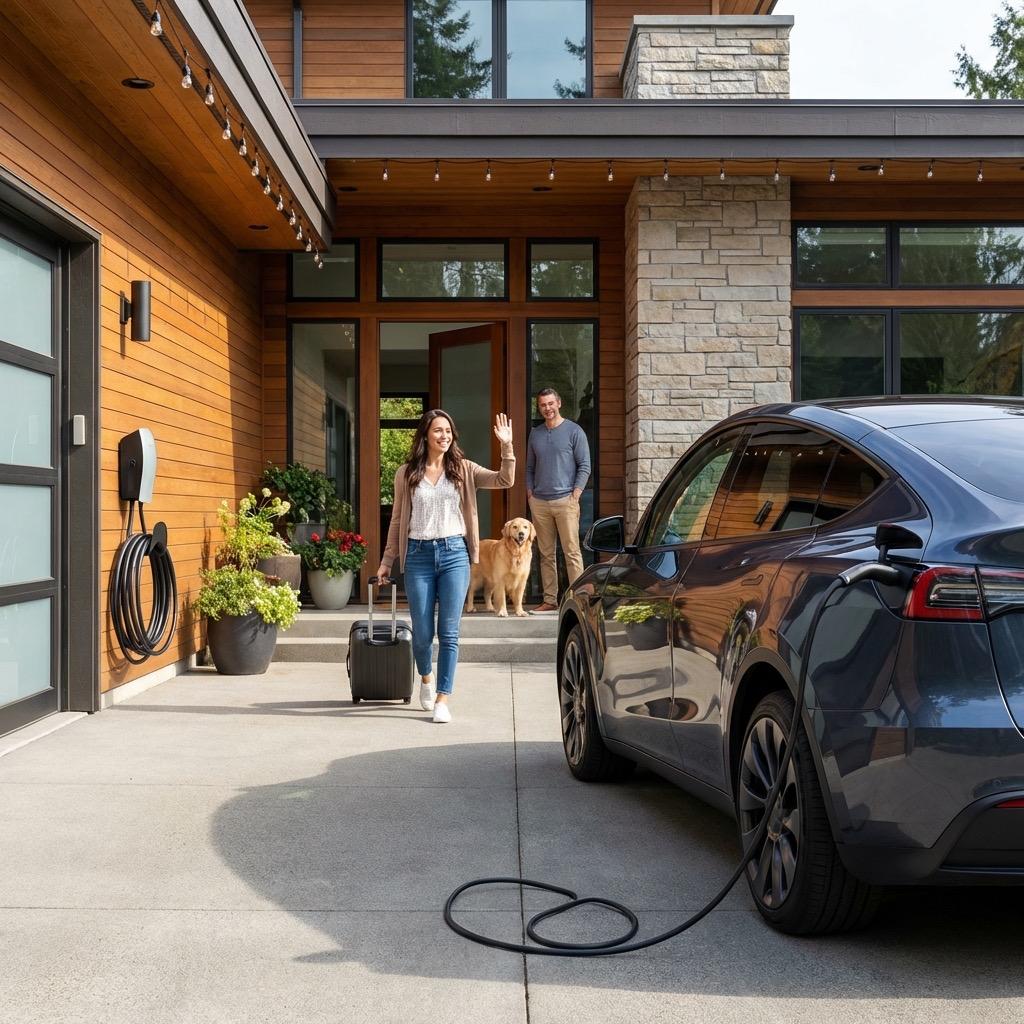
An EV charger cable that drags on the garage floor is more than just unsightly. It creates tripping hazards for your family, suffers accelerated wear from being driven over or kinked, and makes your garage look cluttered. Proper cable management is a small investment that extends the life of your charging cable, keeps your garage safe and organized, and makes the daily plug-in routine smoother. For Northern Virginia homeowners who take pride in well-maintained garages in their Fairfax, Arlington, Loudoun, or Prince William County homes, these cable management solutions deliver practical results.
Key Takeaways
- J-hooks are the simplest and most cost-effective cable management solution at $5-$15 per hook.
- Connector holsters protect the J1772 or NACS connector from dirt and damage when not in use.
- Cable retractors provide the cleanest appearance but cost $100-$300 and add mechanical complexity.
- Mounting your charger at the right height relative to your vehicle's charge port minimizes excess cable length.
- Never drive over, kink, or tightly bend your charging cable, as internal conductor damage can create safety hazards.
Why Cable Management Matters
EV charging cables are thick, heavy, and long, typically 18-25 feet of rubber-jacketed cable containing multiple heavy-gauge conductors. Left unmanaged, these cables coil on the floor, drape across walkways, and accumulate dirt and moisture that can affect the connector. Proper management addresses several practical concerns.
Safety
A cable on the garage floor is a tripping hazard, especially in a dark garage or when carrying groceries from the car. For families with children in Northern Virginia's family-oriented neighborhoods, keeping the cable off the floor eliminates a common household injury risk.
Cable Longevity
Driving over the cable, even at low speed in the garage, compresses the internal conductors and can damage insulation over time. Tight kinks stress the copper conductors at specific points, potentially creating internal breaks or high-resistance connections that generate heat. A cable that is properly managed and stored when not in use can last the lifetime of the charger.
Connector Protection
The J1772 or Tesla NACS connector is a precision electrical component with specific tolerances. Dropping it on the concrete floor, leaving it in standing water, or allowing it to collect garage dust degrades the connector's contacts and weather seals over time. A proper holster or hook keeps the connector clean, dry, and protected.
Aesthetics
A well-organized garage reflects care and attention. For Northern Virginia homeowners who use their garages as workshops, recreation spaces, or simply want a clean environment, cable management transforms a utilitarian charging setup into a tidy installation that looks purposeful and professional.
Cable Management Solutions
J-Hooks and Wall Hooks
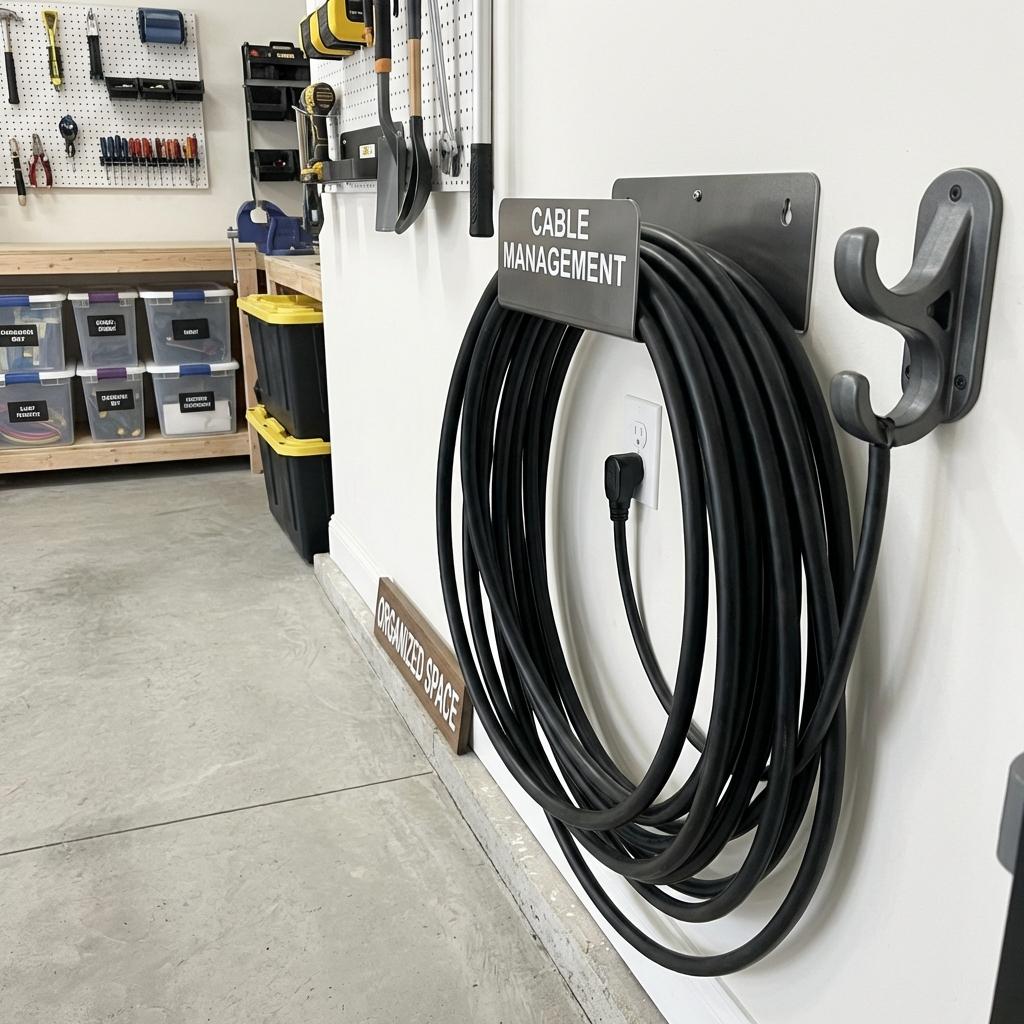
The simplest and most popular cable management solution is a set of wall-mounted J-hooks. These curved hooks, typically made of heavy-duty plastic or rubber-coated metal, mount to the wall at charger height and hold the cable in a loose loop when not in use. Install two or three hooks spaced 12-18 inches apart to create a gentle serpentine path that holds the cable without sharp bends.
Our licensed electricians have installed hundreds of EV chargers across Northern Virginia. We handle everything from panel evaluation to permit filing. Call (703) 997-0026 or request your free estimate online.
J-hooks cost $5-$15 each and install in minutes with standard screws and drywall anchors. They are available at any hardware store and work with every EV charger brand. For most Northern Virginia homeowners, a set of three J-hooks provides excellent cable management at minimal cost. Mount them at 42-48 inches from the floor, approximately the same height as the charger, to minimize cable draping.
Connector Holsters
A holster provides a dedicated resting place for the charging connector when it is not plugged into your vehicle. The connector slides into or hangs in the holster, keeping it clean, protected, and easily accessible for the next charge. Many EV chargers include a built-in holster, but aftermarket options are available for chargers that do not.
The Tesla Wall Connector includes an integrated holster that holds the NACS connector securely. The ChargePoint Home Flex has a similar built-in connector rest. For chargers without integrated holsters, universal J1772 holsters mount to the wall near the charger for $10-$25. Position the holster at a comfortable height for one-handed connector insertion, typically 36-42 inches from the floor.
Cable Retractors
Cable retractors use a spring-loaded or motor-driven mechanism to automatically wind the cable out of the way when you unplug from your vehicle. You pull the cable to reach your car, and when you disconnect, the retractor pulls the cable back to the ceiling or wall-mounted unit. This provides the cleanest possible appearance with zero cable visible when not in use.
Retractors cost $100-$300 and install on the ceiling above the charger or on the wall nearby. They add mechanical complexity compared to simple hooks and represent another component that could eventually need maintenance or replacement. For homeowners who prioritize a pristine garage appearance, retractors deliver a premium experience. For most practical purposes, however, hooks and holsters provide 90% of the benefit at 10% of the cost.
Cable Wraps and Organizers
Velcro cable wraps or silicone cable clips can bundle excess cable length when you do not need the full extension. If your charger has a 24-foot cable but your car parks only 8 feet away, wrapping or clipping the excess keeps it tidy. These accessories cost $5-$15 and are useful supplements to hooks or holsters.
Charger Placement for Optimal Cable Management
The best cable management starts with thoughtful charger placement during installation.
Minimize Cable Distance to Charge Port
Position your charger as close as practical to where your vehicle's charge port sits when parked. Most EVs have the charge port on the driver's side front fender (Tesla, Hyundai, Ford) or rear quarter panel (Tesla). Mounting the charger on the wall nearest this location means less cable in play and less to manage.
Mounting Height
Mount the charger at 42-48 inches from the floor. This height positions the cable exit point above most vehicles' belt lines, allowing the cable to drape downward gently to the charge port without excessive loops or bends. It also keeps the charger and cable above the bumper zone, preventing accidental contact when parking.
Consider Both Sides of the Garage
If you park two vehicles in a two-car garage, consider which vehicle gets the charger and position it accordingly. If both vehicles are EVs (increasingly common in Northern Virginia two-EV households), you may need a charger positioned to reach either parking position, which requires the longer cable to be well-managed for the closer vehicle.
Cable Care Best Practices
Beyond management and organization, proper cable care ensures safety and longevity.
Avoid Driving Over the Cable
Even a slow-moving car exerts significant force on a cable lying on the garage floor. Repeated compression can damage internal conductors, creating hidden weak points that may eventually overheat under load. Always ensure the cable is hung on hooks or retracted before moving the car.
Prevent Tight Bends
Charging cables have a minimum bend radius, typically 4-6 inches. Bending the cable tighter than this compresses the copper conductors on the inside of the bend and stretches them on the outside, creating stress that leads to fatigue failure over time. When looping cable on hooks, maintain gentle curves rather than tight coils.
Keep Connectors Clean
Periodically inspect the J1772 or NACS connector for debris, moisture, or corrosion on the contacts. A dry cloth wipe keeps contacts clean. Never use water, solvents, or compressed air on the connector.
Inspect Cable Jacket Regularly
Look for cuts, cracks, or wear in the cable's outer jacket. Damage that exposes the internal conductors is a safety hazard and means the cable should be replaced. UV exposure (for outdoor installations) accelerates jacket degradation, making periodic inspection especially important for driveway chargers.
Cable Management for Outdoor Installations
Outdoor chargers in Northern Virginia driveways and carports face additional cable management challenges. UV exposure, rain, snow, and temperature extremes affect the cable over time. For outdoor installations, hang the cable on hooks or a holster rather than letting it coil on the ground where it sits in water. Use UV-resistant cable ties if you bundle excess cable. Ensure the connector rests in a holster or covered area when not in use.
Professional Cable Management Installation
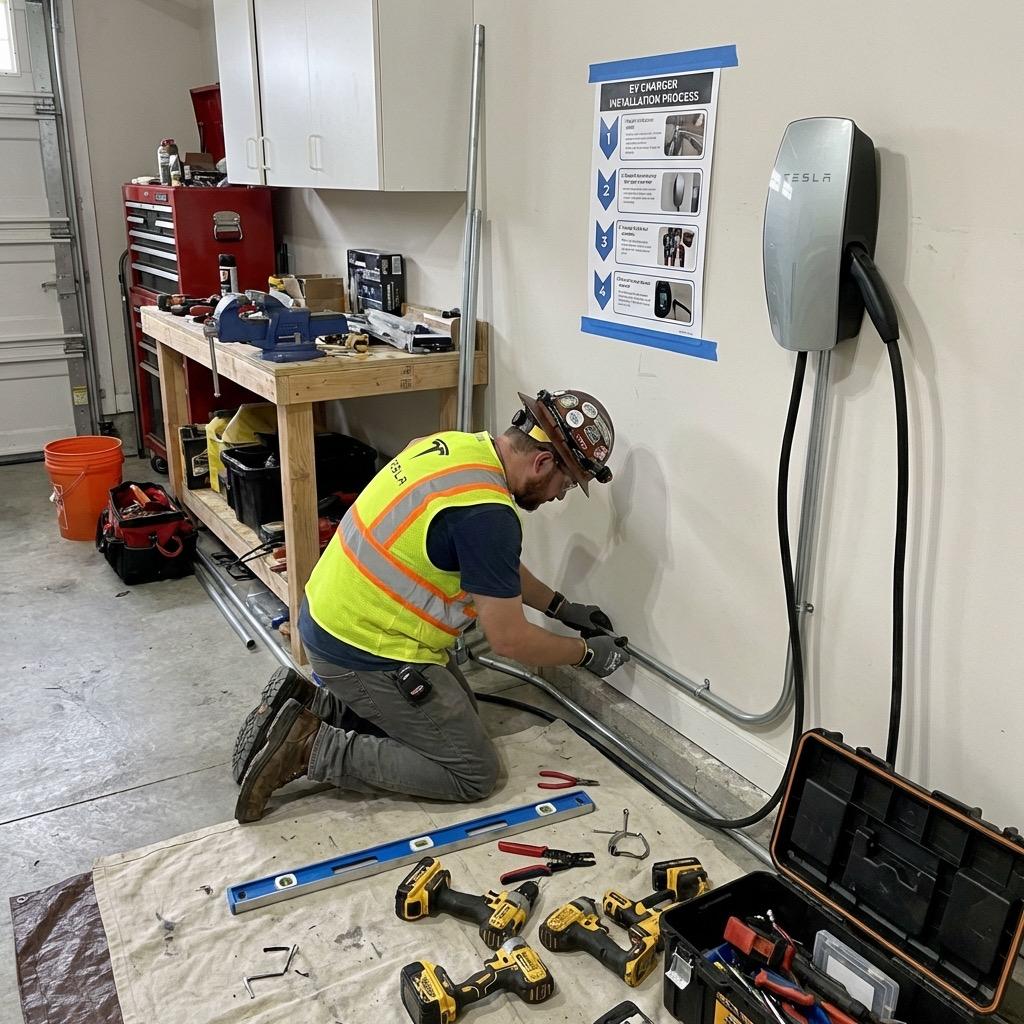
AJ Long Electric includes cable management recommendations and basic hook installation as part of every EV charger installation we perform. For homeowners who want a premium cable management setup including retractors or custom solutions, we provide those as add-on services. Contact AJ Long Electric at (703) 481-3732 for a complete EV charger installation with professional cable management in your Fairfax, Arlington, Loudoun, or Prince William County home.
Tags:

Written by
Matt Long
Master Electrician
Our team of licensed electricians brings over 40 years of combined experience serving Northern Virginia. We're committed to providing expert electrical solutions with a focus on safety, quality, and customer satisfaction.
Reviewed by AJ Long Electric Master Electricians · VA License #2705031092 · View Credentials